
"Imported Fine"
2000 article(s) found

A brief introduction to the flavor and aroma characteristics of imported warm Panamanian Kasha boutique coffee beans
Flavor characteristics Panamanian coffee with good citrus, floral aromas, bright taste, elegant and complex flavor. Fragrance (dry fragrance): jasmine, citrus, tea, honey Aroma (wet fragrance): berries, flowers, oils, vanilla, citrus Flavor (sips): juice sweet, sour, non-irritating, good cleanliness, bergamot, honey, citrus, spices, flowers, berries

Testing coffee beans by cup test how coffee merchants buy coffee beans imported coffee
The cup method is here to introduce the DISCOVERY cup method for you. (1) prepare props. Coffee beans 10g3 cup (prepare 2 coffee beans roasted before explosion. The FUJIROYAL coffee grinder and the R202 scale ⑥ were used for grinding. Glass of the same size, or container 3 boiled water (100cc) 3 cups spoon (spoon or spoon if available)

A brief introduction to the market price of imported warm Panamanian Kasha boutique coffee beans
The microclimate of the Panamanian highlands is the most important resource that makes Panamanian coffee unique. The most important resource that makes Panamanian coffee unique is its microclimate. The east-west environment of the Republic of Panama allows cold air to flow through the Central Mountains and converge above 6500 feet, creating a variety of microclimates in the Boquete and Volcn Candela regions.
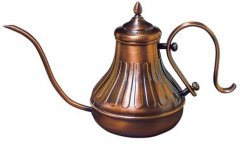
It is best to use the hand to make the coffee pot kalita the court hand.
All-copper refinement: exquisite and elegant shape, showing exquisite texture. All-copper refined body, high-efficiency thermal conductivity, is the best choice for filter coffee. Fine mouth design: the purpose is to easily control the amount of water when brewing coffee, so that the coffee powder everywhere can receive the same amount of hot water equally, so as to prevent excessive extraction or underextraction in some places.

Brief introduction to the treatment method of grinding degree and baking degree of imported warm Panamanian Kasha boutique coffee beans
Panamanian coffee is classified and numbered into small batches, which are designed to have a small capacity for optimal management, and classification numbers allow buyers to understand and track the entire process. Because of its small quantity, Panamanian coffee products are based on special coffee. The country provides its high-quality products to specialized stores around the world, such as Denmark, Britain, Greece, Norway, Sweden and South Korea.

Boutique roaster opens a new era of coffee in China
According to the statistical report of the international coffee organization, China's coffee consumption is growing at a high speed of 16% a year. China imported 1.6 million bags of coffee from 2013 to 2014, about 9600 tons, ranking only 17th in the world. Coffee consumption in Europe and the United States is no one's annual 4kg, while that of Chinese is only 83g. It can be said that there is still a broad and huge consumption in China's coffee market.

Recommendation of Shantou characteristic Cafe-Noki CAFE
There are stories in the cafe, coffee aroma of life. This is a small community cafe of fine slow times, selling individual coffee and other coffee drinks with different flavors from boutique coffee bean farms around the world, as well as hand-baked desserts made of all-natural high-quality materials. All coffee in our shop is made of high quality Arabica boutique coffee beans and imported milk, and desserts are private.

A brief introduction to the origin, development, history and culture of imported warm Panamanian Kasha boutique coffee beans.
In Poquet's unique planting environment, there is naturally not only the rose summer of emerald, the king of coffee, regardless of flavor, quality and value, but I think it is quite extravagant to drink rose summer every day, and even if there is no economic pressure, it is not like eating shark's fin and bear's paw every day. The same is true of coffee. It is necessary to dabble in a wide range of subjects in order to enjoy the taste of coffee.

The world's fine coffee is produced in Kenya.
Coffee entered Kenya in the 19th century, when Ethiopian coffee drinks were imported into Kenya through southern Yemen. But it was not until the early 20th century that the Bourbon Coffee Tree was created by the St. Austen Mission (St). Austin Mission) is introduced. Kenyan coffee is mostly grown at an altitude of 1500 to 2100 meters and is harvested twice a year. To ensure that only ripe berries are picked, people must

Knowledge of Fine Coffee beans-- the unique taste of Kenyan coffee from Kenya
Coffee entered Kenya in the 19th century, when Ethiopian coffee drinks were imported into Kenya through southern Yemen. But it was not until the early 20th century that the Bourbon Coffee Tree was created by the St. Austen Mission (St). Austin Mission) is introduced. Kenyan coffee is mostly grown at an altitude of 1500 to 2100 meters and is harvested twice a year. To ensure that only ripe berries are picked, people must

Kenya Jinchu Coffee Flavor description introduction to the taste of fine coffee beans in the producing area
It entered Kenya in the 19th century, when Ethiopian coffee drinks were imported into Kenya through southern Yemen. But it was not until the early 20th century that the bourbon was introduced by the St. Austen Mission (St.AustinMission). Kenyan coffee is mostly grown at an altitude of 1500m, 2100m, and is harvested twice a year. To ensure that only ripe berries are picked, people must be in the forest

Kenyan Coffee Flavor description processing methods Taste characteristics of Fine Coffee
Coffee entered Kenya in the 19th century, when Ethiopian coffee drinks were imported into Kenya from southern Yemen. But it was not until the early 20th century that the bourbon was introduced by the St. Austen Mission. Kenyan coffee is mostly grown at 15002100 meters above sea level and is harvested twice a year. Kenyan industrious people love coffee as much as lovers in love. Jim Ken

How to preserve the basic knowledge of coffee beans and fine coffee
How to add milk to the coffee? I also have a suggestion. The first choice: fresh milk. Imported brands are the best. Light cream, that's even more advanced. And the best. It is especially suitable for deep-roasted coffee like Manning. Second, no trans fat coffee partner, this kind of partner is only available abroad. I've never seen it in China. On the question of adding sugar. Uncle Dou suggested Ning.

How much is the coffee bean in 2019? 2019 per jin of imported coffee bean price list of roasted cooked beans
Professional coffee knowledge exchange more coffee bean information Please pay attention to the coffee workshop (Wechat official account cafe_style) Coffee varieties are mainly divided into two categories, namely, Arabic and Robusta. Arabica varieties grow in a harsh environment and have high planting costs. The yield accounts for 2% of coffee production. The main producing areas are Brazil, Colombia and Latin America.

Blue Mountain Coffee Jamaica Blue Mountain Coffee Fine Coffee Raw beans
Blue Mountain Coffee on the market, in the publicity of many coffee shops, Blue Mountain Coffee from Jamaica is the best coffee, costing at least NT $30 to NT $40 for a cup. But is the world's top coffee hawked by merchants really imported from Jamaica? Is it really worth that much? A few days ago, the reporter did not seem to pay close attention to this doubtful point.

Taste of Jamaican Coffee Fine Coffee is introduced in the manor area.
In 1717, King Louis XV of France ordered the cultivation of coffee in Jamaica. In the middle of the 20th century, the Governor of Jamaica, Sir Nicholas Nicholas Lawes, imported Arabica seeds from Martinique and began to plant them in St. Andrew. To this day, St. Andrew

A brief introduction to the History and Culture of the Origin and Development of Fine Coffee in Berman Manor, Kenya
Coffee entered Kenya in the 19th century, when Ethiopian coffee drinks were imported into Kenya from southern Yemen. But it was not until the early 20th century that the bourbon was introduced by the St. Austen Mission. Kenyan coffee is mostly grown at 15002100 meters above sea level and is harvested twice a year. Kenyan industrious people love coffee as much as lovers in love. Jim Ken

Boutique coffee Jamaica Blue Mountain Coffee introduction Fine Coffee beans St. Thomas producing area Valenford Manor
In 1717, King Louis XV of France ordered the cultivation of coffee in Jamaica. In the middle of the 20th century, the Governor of Jamaica, Sir Nicholas Nicholas Lawes, imported Arabica seeds from Martinique and began to plant them in St. Andrew. To this day, St. Andrew

Illustration of coffee flower making
Espresso Coffee: since the Latte coffee we use to make flowers is made from Espresso, it is also necessary to extract the correct Espresso. After all, this is a drink to be imported rather than a work of art, and we still have to ensure the quality of it. In this way, the failed 10-odd cups will not be wasted in the process of doing practice flower drawing.
Characteristics of Kenyan Coffee beans Fine Coffee
Coffee entered Kenya in the 19th century, when Ethiopian coffee drinks were imported into Kenya through southern Yemen. But it was not until the early 20th century that the Bourbon Coffee Tree was created by the St. Austen Mission (St). AustinMission) is introduced. Kenyan coffee is mostly grown at an altitude of 1500 to 2100 meters and is harvested twice a year. To ensure that only ripe berries are picked, people must be in the forest